

Recommendations
for a More Connected Community
Introduction to the Recommendations
Our recommendations for strengthening social connection across the Fox Valley are grounded in research, community listening, and nationally recognized frameworks that help translate complex evidence into actionable strategies.
To organize our findings and identify the areas where community investment can have the greatest impact, we aligned this work with the Vital Conditions for Health and Well-Being framework developed by the Rippel Foundation. This framework – also used in the Tri-County Community Health Report – recognizes that thriving communities depend on a set of shared conditions that shape daily life. These include Belonging & Civic Muscle, Humane Housing, Reliable Transportation, a Thriving Natural World, Meaningful Work & Wealth, Lifelong Learning, and Basic Needs for Health & Safety. Together, these conditions represent the systems and environments that influence whether people have opportunities to connect, participate, and experience a sense of belonging.
While Belonging & Civic Muscle sits at the center of this framework, each of the other conditions also plays a critical role in shaping social connection. Housing design can either foster or isolate neighbors. Transportation systems determine whether residents can reach workplaces, community events, and services. Schools, parks, workplaces, and healthcare settings can all serve as important sites of connection – or barriers to it. By organizing our recommendations around these conditions, we recognize that strengthening social connection requires attention to the broader systems that shape everyday life.
This approach builds on national research, including the Promising Strategies for Social Connection outlined in the Action Guide for Building Socially Connected Communities developed by the Foundation for Social Connection. While that guide identifies key systems where social connection strategies can be implemented, the Vital Conditions framework allows us to place these strategies within a broader understanding of community health and well-being that is already guiding collaborative work across the tri-county region.
As the work of Connected Fox Valley continues, these recommendations will be further refined and expanded. Over time, we will add local history, community context, and deeper detail about existing efforts, lessons learned, and opportunities to build on what is already happening across Calumet, Outagamie, and Winnebago counties.
Visualizing the Vital Conditions Framework
The recommendations below are organized using the Vital Conditions for Health & Well-Being framework, which places Belonging & Civic Muscle at the center of community health. This framework helps show how social connection is shaped not only by relationships, but also by housing, transportation, learning, work, safety, and the environments in which people live.
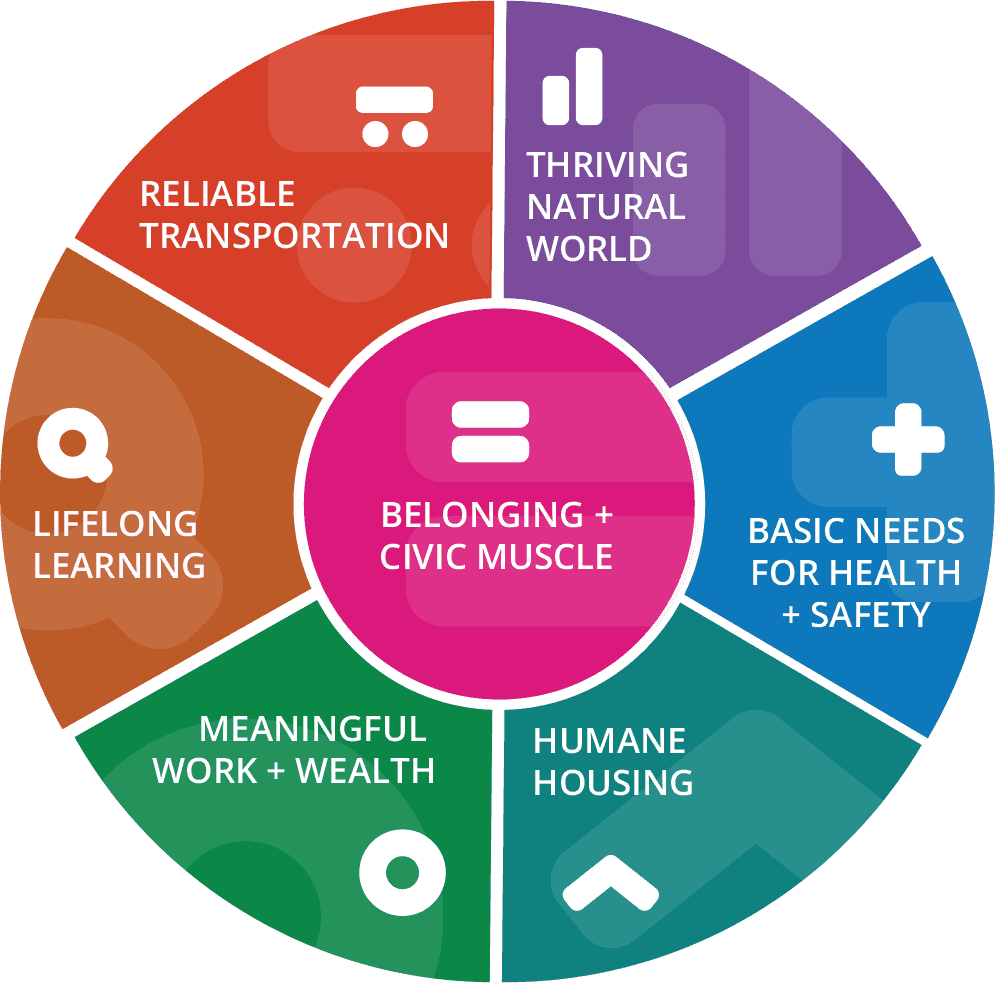
The Vital Conditions wheel shows the seven conditions that help communities thrive, with Belonging & Civic Muscle at the center.
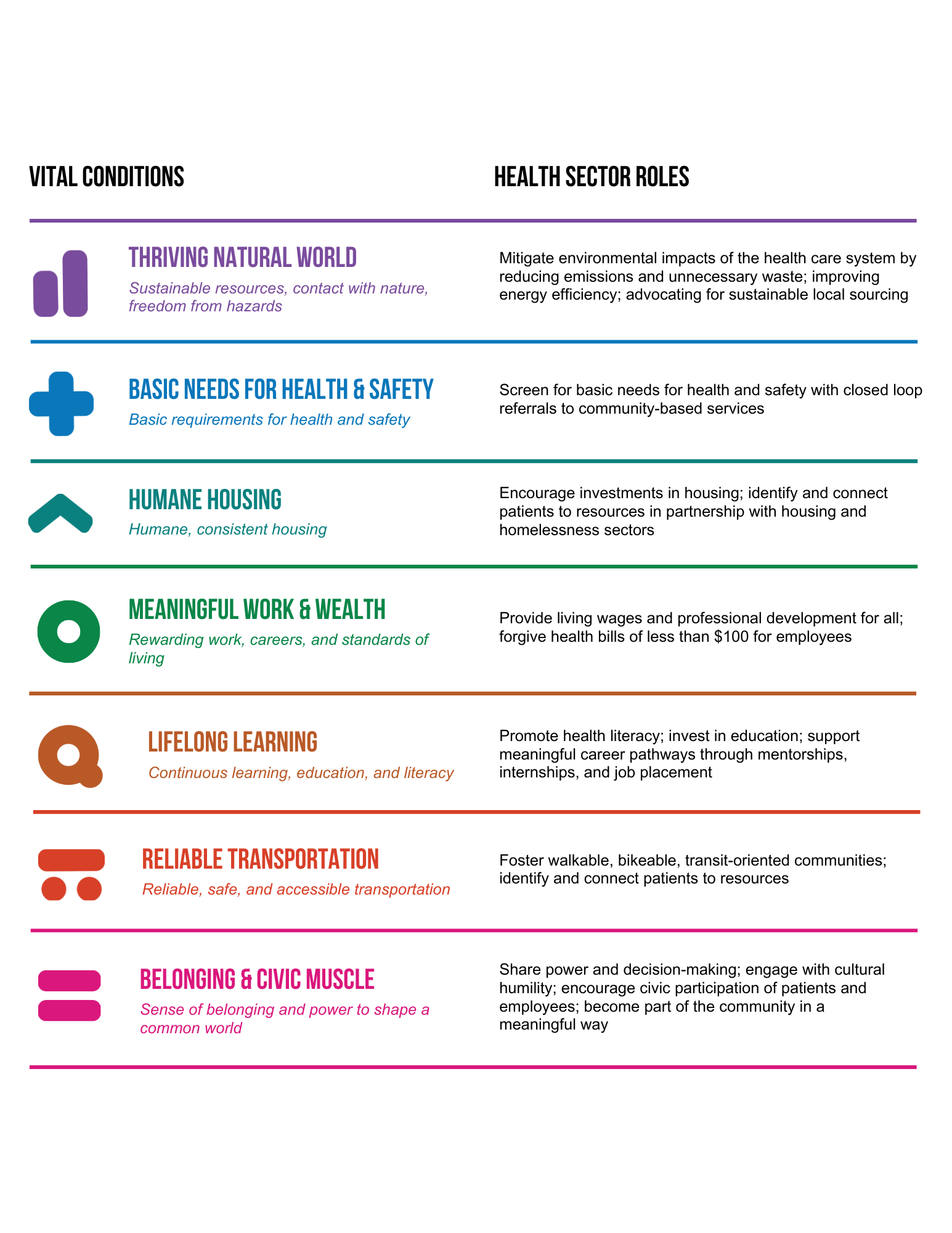
This table provides another view of the Vital Conditions framework and the ways these conditions work together to support health and well-being.
Recommendation Categories
Belonging & Civic Muscle
Strengthen and invest in neighborhood associations and resident-led networks
Neighborhood-level networks help build trust, mutual support, and community identity. Supporting neighborhood associations, block groups, and resident-led initiatives can strengthen social ties and empower residents to shape their communities. Investments may include small grants, facilitation support, leadership training, and tools that help neighbors organize events and initiatives.
Expand volunteer opportunities that foster connection and shared purpose
Volunteerism provides one of the most accessible pathways to social connection. Expanding volunteer infrastructure – including opportunities for youth, older adults, and diverse communities – can strengthen civic participation while addressing community needs. Partnerships with organizations like Volunteer Fox Cities can help broaden participation and connect residents with meaningful service opportunities.
Humane Housing
Create housing environments that foster community and intergenerational connection
Housing environments can either isolate residents or bring people together. Innovative housing models—including intergenerational housing, co-housing communities, and home-sharing arrangements—can strengthen social support networks and reduce loneliness. Housing developments that incorporate shared spaces, communal areas, and community programming can also promote neighbor relationships.
Reliable Transportation
Develop transportation solutions that prioritize connection and accessibility
Reliable transportation allows residents to reach workplaces, community events, healthcare services, and social activities. Gaps in transportation systems—particularly across county lines—can limit opportunities for connection. Expanding transit options, coordinating transportation services, and supporting community-based transportation programs can help reduce isolation, particularly for older adults, youth, and residents without reliable vehicles.
Thriving Natural World
Design, maintain, and activate inclusive public spaces
Parks, trails, and green spaces are essential gathering places where people can connect with both nature and each other. Ensuring these spaces are safe, accessible, and welcoming to diverse populations helps foster social interaction and community pride. Programming such as outdoor events, community gardens, and stewardship activities can further activate these spaces as hubs of connection.
Increase access to recreation and socializing through shared-use agreements and cross-sector partnerships
Meaningful Work & Wealth
Encourage workplaces to foster belonging and community engagement
Workplaces are an important site of social connection. Employers can support belonging by cultivating inclusive workplace cultures, encouraging volunteerism, and creating opportunities for employees to engage with the broader community. Flexible scheduling and family-supportive policies can also make it easier for workers to participate in community activities and maintain relationships outside of work.
Lifelong Learning
Integrate social-emotional learning and relationship-building across educational settings
Schools and youth-serving organizations play a critical role in helping young people develop social and emotional skills. Integrating social-emotional learning into classrooms, after-school programs, and extracurricular activities helps youth build empathy, communication skills, and healthy relationships.
Expand social, educational, and recreational opportunities for youth
Young people benefit from opportunities to connect with peers through clubs, arts programs, mentorship initiatives, and recreational activities. Expanding accessible and culturally responsive programming—especially programs that are free or low-cost—can help youth develop friendships, identity, and a sense of belonging.
Promote early relational health within families and caregiving environments
Basic Needs for Health & Safety
Expand access to physical activity and wellness programs
Community-based physical activity programs—such as walking groups, fitness classes, and recreation leagues—can help residents improve their health while building social relationships. Accessible programs that welcome participants of all ages and abilities can help reduce isolation and promote well-being.
Integrate social prescribing within healthcare systems
Healthcare providers are increasingly recognizing the role that social connection plays in health outcomes. Social prescribing allows clinicians to connect patients with community programs, volunteer opportunities, and social activities that support well-being. Building partnerships between healthcare providers and community organizations can help expand these referrals and strengthen support networks for patients.
Create safe and walkable neighborhoods
Safe streets, sidewalks, and pedestrian infrastructure make it easier for residents to walk, gather, and interact in their neighborhoods. Improving lighting, traffic calming measures, and pedestrian pathways can help foster informal interactions and strengthen neighborhood cohesion.
Design and maintain public spaces that feel physically and emotionally safe for people of all ages, abilities, and identities
Support community-based approaches to safety that build trust, familiarity, and mutual care among neighbors
