

Who is Most Affected
by Loneliness & Isolation?
Who is most affected by loneliness and isolation?
Experiences of social isolation and loneliness are not evenly distributed across the population. They are shaped by life stage, identity, access to resources, and the systems and environments in which people live. Structural factors such as transportation, housing stability, discrimination, income inequality, caregiving demands, and access to inclusive community spaces can limit opportunities for meaningful connection long before individual choice comes into play. For some groups, repeated experiences of exclusion or stigma further erode trust and belonging, making it harder to form and sustain social ties. Understanding who is most affected, and why, helps communities move beyond one-size-fits-all solutions toward strategies that are responsive, equitable, and grounded in lived experience.
Within this context, Calumet, Outagamie, and Winnebago counties together form a diverse and evolving region that reflects both the strengths and the challenges of Northeast Wisconsin. Home to mid-sized cities, small towns, and rural communities, the tri-county region includes dense urban neighborhoods, suburban corridors, agricultural areas, and lakeside communities. How people experience social connection here is shaped not only by who they are, but also by where and how they live.
The region is predominantly white, reflecting historical settlement patterns common across much of Wisconsin. At the same time, the Fox Valley has become increasingly diverse over the past two decades. Growing populations of Black, Hispanic and Latino, Asian, Indigenous, and multiracial residents contribute to the cultural, linguistic, and social fabric of the region. Many families are newcomers to the area, while others represent long-standing communities with deep local roots.
The tri-county region is also demographically mixed by age. Children and families make up a significant share of the population, alongside a large and growing number of older adults. As residents age in place, questions of transportation, mobility, caregiving, and social participation become increasingly important. Younger adults, meanwhile, often report difficulty forming lasting social ties due to housing instability, work schedules, caregiving responsibilities, or transitions related to education and employment.
Urban-rural differences further shape experiences of connection and isolation. Residents in urban centers may have greater proximity to services, community spaces, and organized activities, yet still experience loneliness due to social fragmentation or economic stress. In rural areas, social networks may be tighter but harder to access, especially for people who are new to the community, lack reliable transportation, or fall outside dominant social or cultural groups.
Together, these characteristics underscore a central insight of Connected Fox Valley: social isolation and loneliness are influenced by systems, structures, and place, not just personal circumstances. While the tri-county region shares many strengths, the risk of disconnection is unevenly distributed across populations. Recognizing these differences helps illuminate where gaps exist, whose experiences have been historically overlooked, and where targeted opportunities for strengthening connection and belonging can have the greatest impact.
Population and Demographics
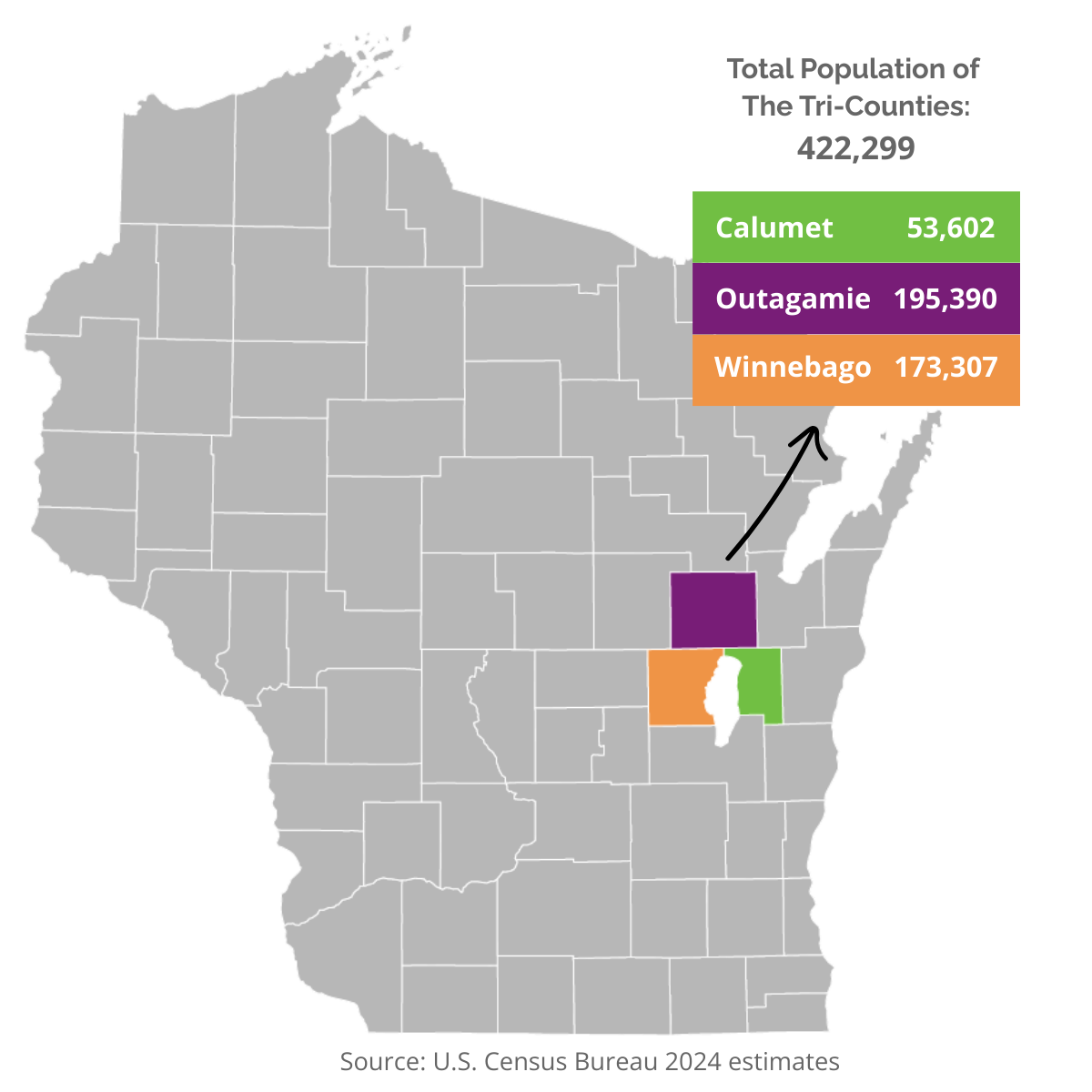
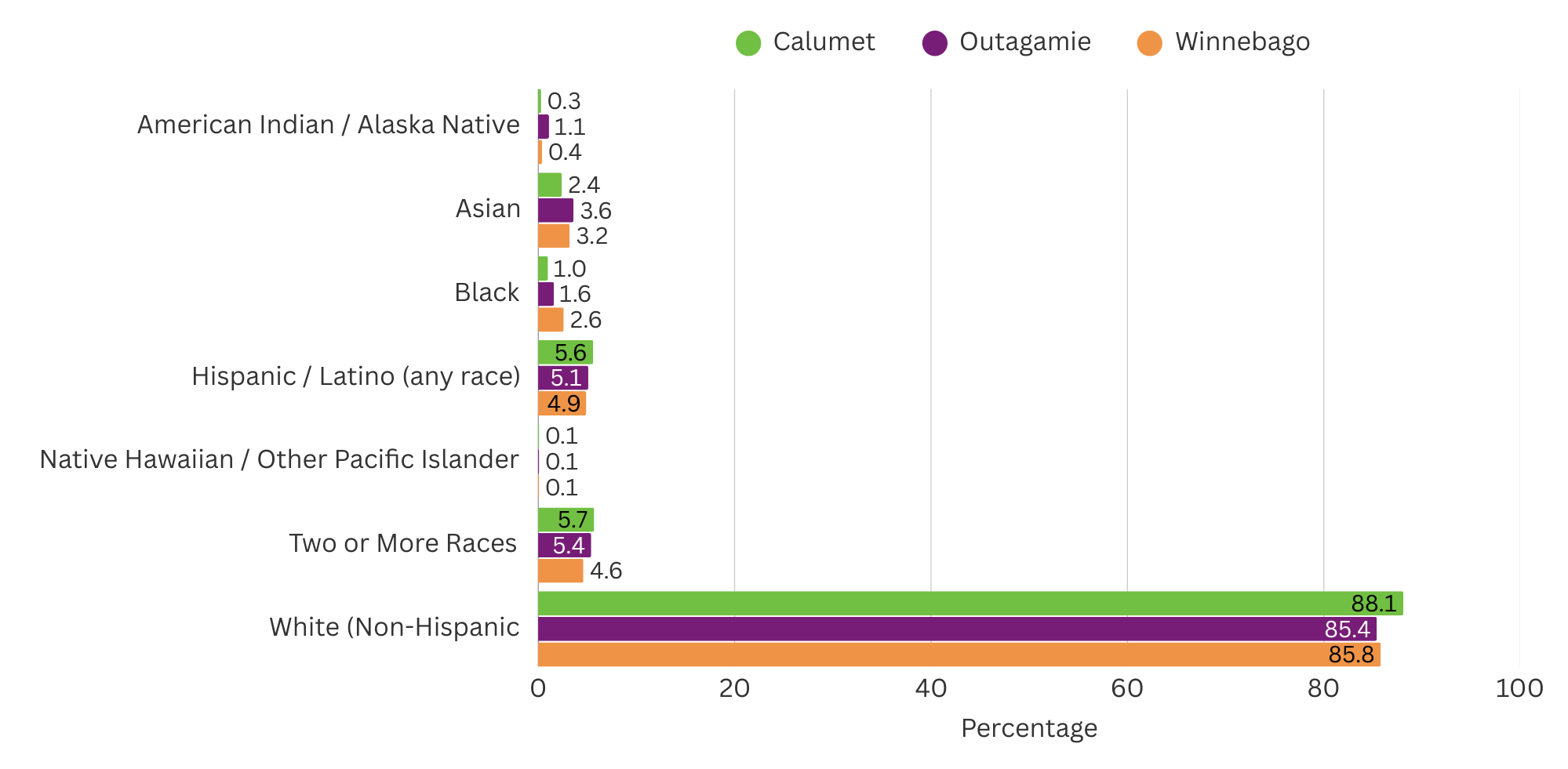
Isolation and Loneliness Across Age Groups and Communities
The sections below highlight populations that are more likely to experience isolation and loneliness in our region, helping to clarify where targeted, equitable strategies are most needed.
By Age & Life stage
- Children and adolescents, particularly those experiencing bullying, mental health challenges, or unstable home environments
- Young adults (18–29), especially during transitions related to education, employment, or housing
- Parents and caregivers, including single parents and those caring for children with special health or behavioral needs
- Older adults, especially those living alone, experiencing mobility limitations, cognitive decline, or loss of a spouse or peers
By Identity & Life Experience
- LGBTQ+ individuals, particularly in rural or less affirming environments
- BIPOC individuals
- People from racially and ethnically marginalized communities, including immigrants and refugees
- People with disabilities, including physical, intellectual, developmental, and sensory disabilities
- People with mental health conditions or substance use disorders, who may face stigma or fragmented systems of care
- Neurodivergent individuals, including autistic adults and those with ADHD
By Circumstance or Structural Barrier
- People experiencing poverty or financial instability
Low-income individuals are three times more likely to be lonely than those with high incomes.± - Individuals facing housing insecurity or homelessness
- People involved in the justice system, including those reentering the community after incarceration
- Veterans and military-connected individuals, particularly during transition to civilian life.
- People living in rural areas, where distance, transportation, and limited services reduce opportunities for connection
By Access & Infrastructure
- Individuals without reliable transportation
- People with limited access to digital tools or broadband
- Shift workers and people in nontraditional work schedules, who are often disconnected from community rhythms
Social isolation is rising among older adults in Wisconsin
- Nearly 30% of Wisconsin adults age 65+ live alone, increasing the risk of social isolation.
- Social isolation among older adults is associated with higher rates of depression, emergency department visits, and early institutionalization.
Source:
Adults age 65 and older are among the most socially isolated populations in Wisconsin, particularly those living alone, experiencing mobility limitations, or cognitive decline.
Source:
Wisconsin Department of Health Services, Wisconsin Healthy Aging Reports, Wisconsin State Plan on Aging.
Loneliness is a growing concern among young adults
- Adults ages 18–29 consistently report higher loneliness than older adults in national and state surveys.
- Social disconnection in young adulthood is linked to increased anxiety, depression, and suicide risk.
Source:
CDC, Behavioral Risk Factor Surveillance System (BRFSS)
