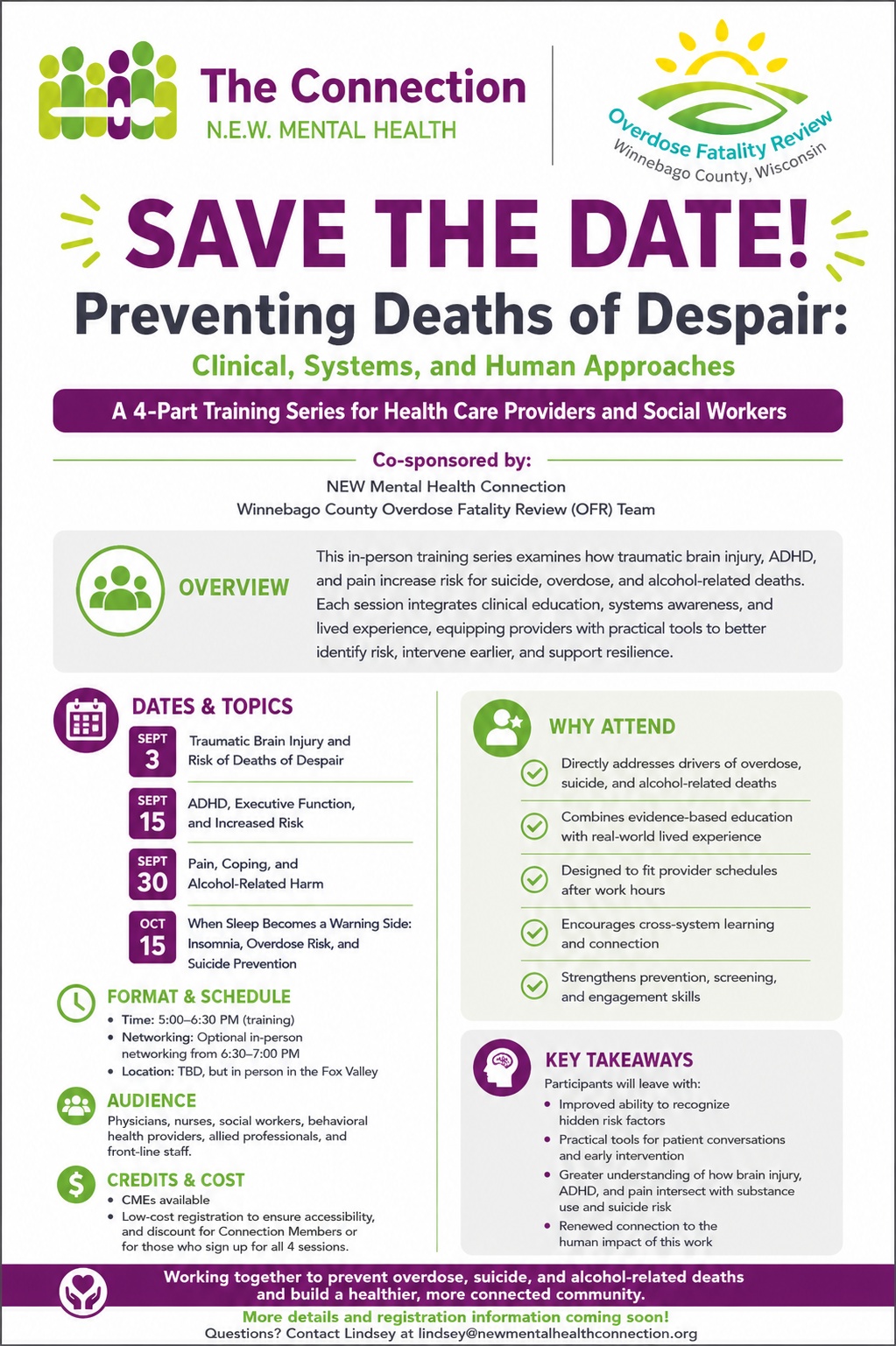
Introducing: Preventing Deaths of Despair Training Series
Sept. – Oct. 2026 | CMEs Available | Member Discounts
Introducing: Preventing Deaths of Despair Training Series
Clinical, Systems and Human Approaches
A Four-Part Training Series for Health Care Providers and Social Workers
Many deaths linked to suicide, overdose, and alcohol misuse are shaped by underlying factors that often go unseen, including traumatic brain injury, ADHD, chronic pain, and sleep disruption.
This four-part training series explores how these experiences can increase vulnerability and examines opportunities for earlier intervention, stronger prevention efforts, and more compassionate systems of care.
Designed to blend clinical education, systems awareness, and lived experience, sessions will provide practical tools professionals can use to better identify risk, support prevention, and strengthen care across settings.
Prevention begins with recognizing risk, and seeing the whole person behind it.
Co-sponsored by: The Northeast Wisconsin Mental Health Connection and The Winnebago County Overdose Fatality Review Team
Quick Details
📅 Dates: Sept. 3, Sept. 15, Sept. 30 & Oct. 15, 2026
🕔 Time: 5–6:30 p.m. (optional networking afterward)
🍽️ Dinner included with registration
📍 Location: Stay tuned… will be announced soon!
🎓 Continuing Education: CMEs available
💲 Registration: Discounts available for Connection members
Explore the Four Training Sessions
Each session focuses on a different factor that can increase vulnerability to suicide, overdose, and alcohol-related harm — while highlighting opportunities for prevention, screening, and support.
Session 1: Traumatic Brain Injury and Risk of Deaths of Despair | Sept. 3
Traumatic brain injury can affect emotional regulation, impulse control, cognition, and coping — increasing vulnerability to suicide, substance misuse, and overdose.
This session explores emerging understanding of TBI as a risk factor and examines opportunities for prevention, screening, and support.
Topics include:
- Recognizing long-term impacts of TBI
- Connections between TBI and suicide risk
- Implications for screening and care
- Prevention opportunities across systems
[ Register for Session ]
Session 2: ADHD, Executive Function, and Increased Risk | Sept. 15
ADHD often extends far beyond attention challenges. Difficulties with executive functioning, impulsivity, emotional regulation, and coping may contribute to increased risk for substance use, mental health challenges, and deaths of despair.
Participants will explore:
- ADHD across the lifespan
- Executive functioning and risk
- Impulsivity and coping behaviors
- Opportunities for earlier support and intervention
[ Register for Session ]
Session 3: Pain, Coping, and Alcohol-Related Harm | Sept. 30
This session examines:
- Pain and emotional wellbeing
- Alcohol use as coping
- Prevention approaches
- Supporting individuals experiencing chronic pain
[ Register for Session ]
Session 4: When Sleep Becomes a Warning Sign | Oct. 15
Sleep challenges are increasingly recognized as important indicators of mental health risk and overall wellbeing.
Participants will explore:
- Sleep disruption and suicide risk
- Links between insomnia, substance use, and overdose
- Screening considerations
- Prevention and intervention opportunities
[ Register for Session ]
Pricing & Registration Options
Register for one session, attend the full series, or become a Connection member and receive the best value.
Connection members receive discounted registration for this series and future trainings.
Single Session(s)
Best for flexibility
$35 per session | Members
$50 per session | Non-Members
Choose the session that best fits your role, interests, or schedule.
Full Series
Get a discount of all 4 sessions!
$120 for Members
$175 for Non-Members
Become a Member + Register!
BEST VALUE
Membership + Full Series: $165
Includes a one-year Connection membership and registration for all four sessions. No separate membership registration is required!
Save $35 compared to nonmember pricing.
Training Details & FAQs
Who should attend?
This series is intended for professionals working across health, behavioral health, and community systems, including:
- Physicians
- Nurses
- Social workers
- Therapists and counselors
- Behavioral health providers
- Public health professionals
- Care coordinators
- Front-line staff
- Substance use professionals
- Educators
- Helping professionals and community support staff
Whether you work in clinical care, prevention, outreach, crisis response, or community support, sessions are designed to provide practical knowledge you can apply immediately.
What will participants gain?
Participants will leave with:
✔ Increased understanding of risk factors linked to deaths of despair
✔ Practical strategies for prevention, screening, and intervention
✔ Tools for navigating difficult conversations around safety, substance use, and suicide risk
✔ Greater awareness of how ADHD, brain injury, chronic pain, and sleep disruption can influence vulnerability
✔ Stronger systems thinking around prevention and support
✔ Insights grounded in both research and lived experience
Do I need to attend all four sessions?
No. Participants may register for individual sessions or attend the full series.
Will CMEs be offered?
Yes. This series has been approved for the American Medical Association Physician’s Recognition Award (AMA PRA) Category1 Credit,™ by the Wisconsin Medical Society.
Participants can earn 1.5 CMEs per session, for a total of 6 if they attend all four.
Download the Training Flyer!
Looking for a printable overview or want to share this training series with colleagues?
Download the flyer with session dates, descriptions, and registration details.
You can also forward the flyer to colleagues, staff, or community partners who may benefit from the series.